Supporting Your Child’s Education at Home: Practical Tips for Parents
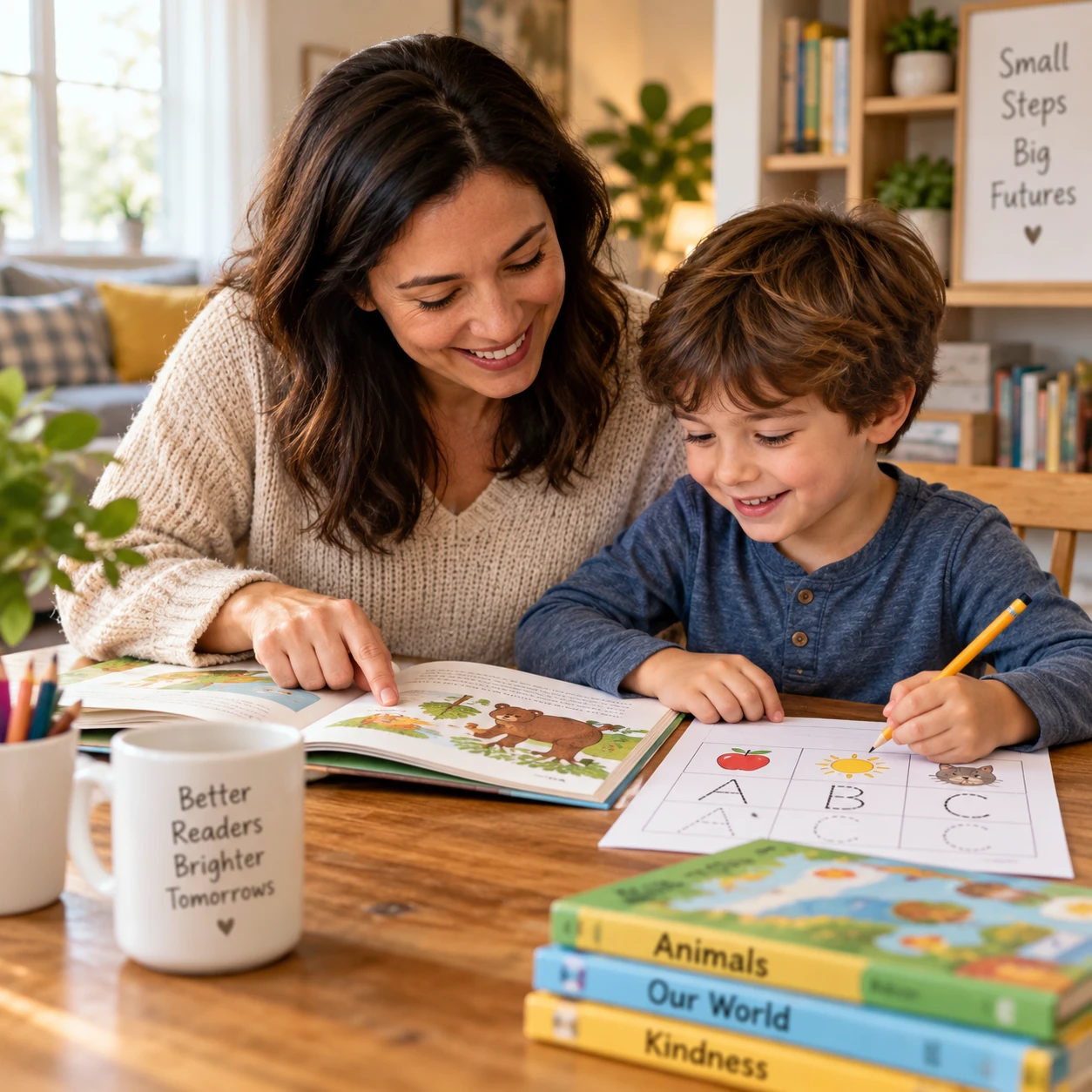
Supporting your child’s education at home does not require a classroom, specialist materials, or hours of tutoring. Everyday moments can help children feel curious, capable, and connected to what they learn at school. The most useful support is usually steady and flexible: a predictable place to focus, time to read and talk, and an adult who listens without taking over.
What Supporting Education at Home Really Means
Supporting education at home means creating opportunities for your child to practise skills, ask questions, and feel encouraged. It complements school and a teacher’s instruction; it does not make parents responsible for teaching every lesson.
Children benefit when home feels like a safe place to try, get something wrong, and try again. Your role may be to read together, help your child organise a backpack, or ask them to explain an idea in their own words. These small acts can reinforce school learning while showing that education matters.
Keep your child’s developmental stage in mind. A young child may learn through short conversations and play, while an older student may need support planning assignments or managing distractions. Children also vary in their interests, strengths, and support needs. Rather than assigning a fixed “learning style,” notice what helps your child engage with a particular task: a demonstration, a written example, movement, quiet, or a chance to talk it through.
Support should fit your household, too. Work schedules, space, language, disability, and access to technology all affect what is realistic. A consistent ten-minute reading habit may be more sustainable than an elaborate plan that creates stress.
Create a Calm, Consistent Learning Routine
A helpful learning routine gives children a predictable time and place for schoolwork while leaving room for rest, play, and family life. It need not follow the same schedule every day.
Choose a homework time that works with your child’s energy and your family’s commitments. Some children focus better after a snack and a short break; others prefer to finish a small task soon after school. Try a routine for a week, then adjust based on how your child responds. A visual checklist can help younger children remember what comes next.
A home learning environment can be simple. A cleared corner of a kitchen table may work as well as a dedicated desk. Keep frequently used supplies nearby, reduce avoidable distractions, and make sure your child has enough light and a comfortable seat. If siblings share space, headphones or agreed quiet periods may help, though a perfectly silent room is not essential for every child.
- Set a clear start and finish time for homework when possible.
- Break longer assignments into smaller steps with brief movement breaks.
- Keep sleep, meals, outdoor time, and unstructured play in the schedule.
- Use a calendar or school platform to track tests and due dates, rather than relying on memory.
For screen time, distinguish school-related use from entertainment and agree on practical boundaries. Educational technology can provide access to lessons and practice, but it can also introduce notifications and tempting distractions. Keep devices focused on the task when possible, and ask your child to take regular breaks from sitting and looking at a screen.
Make Learning Part of Everyday Life
Everyday activities can build language, number sense, curiosity, and problem-solving without feeling like extra schoolwork. Reading together, conversation, play, and household tasks all offer natural chances to practise.
Reading together can mean a bedtime story, a comic, a recipe, a sports article, or taking turns reading aloud. Let your child choose some of the material. Pause to talk about what might happen next, explain an unfamiliar word, or connect a story to something they know. For older children, sharing a book, article, or audiobook can still lead to useful conversations even when they read independently.
Play-based learning also supports development. Building with blocks invites children to compare shapes and test balance; a board game involves counting, turn-taking, and coping with setbacks. During cooking, children can measure ingredients and follow a sequence. On a walk, you might notice patterns, discuss weather, or estimate how long it will take to reach a landmark.
Conversation is another everyday tool. Ask open questions such as, “What surprised you today?” or “How did you work that out?” Give your child time to answer. If they are unsure, explore the question together rather than turning every conversation into a quiz. The point is to make curiosity welcome, not to check whether your child remembers everything from class.
These moments work best when they stay enjoyable. A child who is tired or frustrated may need connection or rest more than another learning activity. Follow their interest, and let ordinary family life provide the material.
Help With Homework Without Taking Over
To help with homework without taking over, clarify the task, ask what your child has tried, and offer the smallest hint that helps them continue. The aim is to support problem-solving and independence, not to produce a perfect answer on their behalf.
Start by asking your child to read the instructions and describe what the assignment requires. If they are stuck, help identify the first step: finding a relevant page, writing down known information, or choosing which problem to attempt. For a maths question, you might ask, “What information do you have?” For a writing assignment, try, “What is one point you want the reader to understand?”
Give your child a chance to work before stepping in. If a prompt is unclear, you can look at the teacher’s instructions together or help your child write down a question to ask at school. Check that the work is complete if that is part of your family’s routine, but resist correcting every error or rewriting a child’s work to make it sound more polished.
- Ask before helping: “Would you like a hint, or do you want a few more minutes?”
- Prompt thinking: “What could you try first?”
- Notice effort: “You went back to the instructions when you got stuck.”
- Hand responsibility back: Let your child write, calculate, or explain the final answer.
If homework regularly leads to arguments, take a breath and look for the reason. The assignment may be too difficult, the routine may be poorly timed, or your child may be tired or worried. A calm conversation and a check-in with the teacher can be more helpful than adding pressure.
Encourage Motivation and Confidence
Children are more likely to stay engaged when adults recognise effort, make goals manageable, and treat mistakes as information about what to try next. Encouragement works best when it is specific and sincere.
Instead of general praise such as “You’re a genius,” describe what you noticed: “You checked your work and caught the missing step.” This connects progress with actions a child can repeat. It also avoids making self-worth depend on grades or getting every answer right.
For a large project, agree on one small next step, such as choosing a topic today and finding two sources tomorrow. A visible checklist can make progress easier to see. Let your child have some choice in how to begin or when to take a short break, within reasonable boundaries.
When a child makes a mistake, respond with curiosity rather than blame. Ask what happened and what they might do differently next time. Avoid comparing siblings or classmates; children develop at different rates, and comparison rarely tells you what support a particular child needs. If frustration rises, pause the task. A short reset can protect confidence better than pushing through an unproductive struggle.
Positive reinforcement does not mean praising every action or avoiding limits. Children also need clear expectations, practical help, and honest feedback. Pair encouragement with a manageable plan, then give them room to practise.
Work With Teachers and Notice When More Support Is Needed
Regular, respectful parent–teacher communication helps you understand what your child is learning and address persistent difficulties early. Share specific observations and ask what support would be useful at home and at school.
If you notice a pattern, describe it clearly: for example, “Reading aloud has become upsetting most evenings,” or “My child often cannot explain the instructions for this type of assignment.” Ask whether the teacher sees something similar in class, what strategies they have already tried, and when you should check back. A short, focused message is often easier to answer than a broad concern such as “School is going badly.”
Seek a conversation when difficulties persist, interfere with your child’s wellbeing, or appear across different tasks. This might include ongoing trouble with reading, writing, maths, attention, attendance, or anxiety about school. One hard week does not automatically mean a child needs formal support, but a recurring pattern deserves attention. Depending on the concern, the teacher may suggest school-based help or explain how to request an assessment through the appropriate process.
Keep the discussion collaborative. Teachers can explain classroom expectations, while you can share what you observe at home. Agree on one or two steps and a time to review whether they help. If a strategy is not working, say so; support should be adjusted rather than treated as a test of whether your family has tried hard enough.
Frequently Asked Questions
Parents can support learning most effectively by matching help to the child’s immediate need, keeping expectations realistic, and seeking school guidance when a concern continues.
How much should parents help with homework?
Offer enough help for your child to understand the instructions and begin, then let them do the thinking and writing. The amount of support will vary by age, subject, and assignment. If your child cannot make progress even with simple prompts, note where they get stuck and contact the teacher rather than completing the work for them.
What if my child refuses to study at home?
First, try to understand what is behind the refusal. Your child may be tired, overwhelmed, worried about getting something wrong, or unsure how to start. Offer a short reset, break the task into a small first step, and agree on a reasonable time to return to it. If refusal becomes a regular pattern, talk with your child and teacher about what might be contributing.
How can I support learning without tutoring?
Read together, talk about your child’s interests, play games, involve them in age-appropriate household tasks, and help them plan their time. You can encourage learning without knowing every subject or supplying extra worksheets. Listening, asking thoughtful questions, and making it safe to ask for help are valuable forms of support.
When should I talk to my child’s teacher?
Contact the teacher when a concern persists, affects your child’s confidence or wellbeing, or makes it difficult to complete schoolwork. Share specific examples and ask what the teacher observes, what you can try at home, and whether further school support may be appropriate. Earlier communication can help everyone understand the issue and agree on a practical next step.